REVIEW · SEMINYAK
Taste & Explore Bali: Denpasar Street Food & Historic Sites
Book on Viator →Operated by Intrepid Urban Adventures - Indonesia · Bookable on Viator
You can taste Bali and learn its history fast. This short Denpasar street-food tour pairs Pura Agung Jagatnatha and Puputan Square with practical bites like Babi Guling and Bakso, plus market snacks and coffee. I especially like the focus on locals selling food for a living, and the small size (up to 12). The main drawback to plan around: the tour is very meat-and-street-forward, and it doesn’t cater well to vegetarian, vegan, or gluten-related needs.
After a 4:00 pm start, the vibe shifts from spiritual calm to busy food stops without feeling rushed. I like that the pacing leaves room to walk, ask questions, and actually notice what people eat and how they order. Just note that it’s best for adults and older kids (no kids under 6), so it’s not the ideal “easy stroller tour.”
In This Review
- Key highlights at a glance
- A 4:00 pm Denpasar street-food walk that starts with sacred ground
- Pura Agung Jagatnatha and Puputan Square: why these stops matter
- Patung Catur Muka: colonial-era landmarks and a four-faced symbol
- Jalan Gajah Mada: Babi Guling and Bakso on heritage streets
- Badung Market and night-market snacks: Jaje Bali and street-food ordering
- NADHI Heritage coffee: a clean finish with Indonesian Arabica
- Price and value: what $45 buys in Denpasar
- Guides who make the food feel specific (not generic)
- Who should book this Denpasar street-food and history tour
- Should you book Taste & Explore Bali: Denpasar Street Food & Historic Sites?
- FAQ
- What time does the tour start, and how long is it?
- Where do I meet and where does it end?
- What food and drinks are included?
- Can the tour accommodate vegetarian, vegan, or gluten-free needs?
- Is this tour okay for children?
- How big is the group?
Key highlights at a glance
- Pura Agung Jagatnatha → Puputan Square: sacred space plus a 1906 resistance story in the center of Denpasar
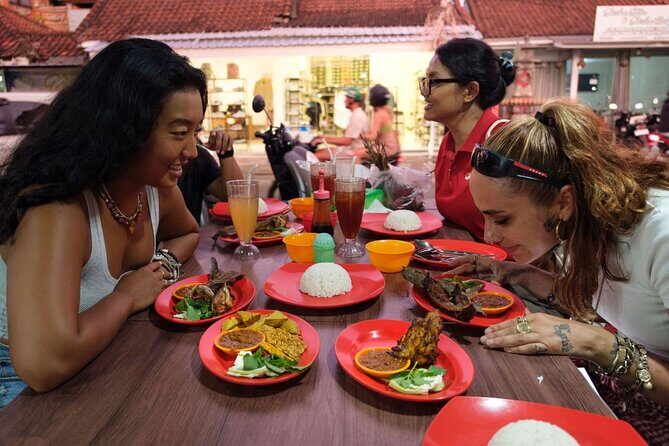
- Real market stops: you’ll sample street foods at Badung Market and related stalls where locals cook and sell
- Babi Guling and Bakso: two signature dishes you’ll learn to order and spot in the wild
- Jaje Bali snacks: a sweet Balinese treat that fits right into a night-market crawl
- Nadhi Heritage coffee: finish with Indonesian Arabica, hot or iced, in a heritage setting
- Small group (max 12): easier questions, better pacing, and more personal attention
A 4:00 pm Denpasar street-food walk that starts with sacred ground
This tour is timed like a lot of the best local food experiences: you start in the late afternoon and roll into night-market energy. The meeting point is at Agung Jagatnatha Temple (Jl. Surapati No.7, Dangin Puri, Denpasar Tim.), with a start time of 4:00 pm and about 3 hours total.
What matters for you: you’re not spending your evening stuck in one restaurant. It’s a guided walking loop through central Denpasar, with short stops (about 15 minutes at the first temple and landmark points, then longer market and food time later). If you like history that you can see with your own eyes—plus food you can actually identify and taste—this timing works well.
The group size is small, up to 12 people (or private). That’s a big deal on food tours, because it means you’re less likely to get separated or feel like you’re rushing through plates while someone waves a banner.
You can also read our reviews of more food & drink experiences in Seminyak

Pura Agung Jagatnatha and Puputan Square: why these stops matter
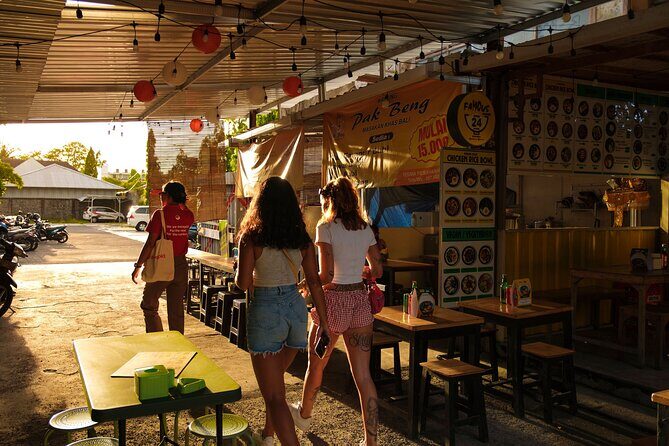
The tour begins at Pura Agung Jagatnatha, a central Hindu temple in Denpasar. The stop is short (about 15 minutes) and the admission is listed as free, but the point isn’t ticking off a photo spot. You’re meant to get your bearings first: sacred space, local rhythm, and a sense of how daily life and belief sit side-by-side here.
Then you pause at Puputan Square, where the tour frames the area as the symbolic heart of Bali and a place to reflect on 1906 resistance against colonial rule. You also get the “zero kilometer” symbolism tied to the area. That context makes the rest of the evening land better—street food isn’t just taste, it’s culture.
A practical consideration: the early part is quieter and more respectful in feel. If you want a low-stress evening, arrive a few minutes early so you can settle into the temple atmosphere without rushing.
Patung Catur Muka: colonial-era landmarks and a four-faced symbol
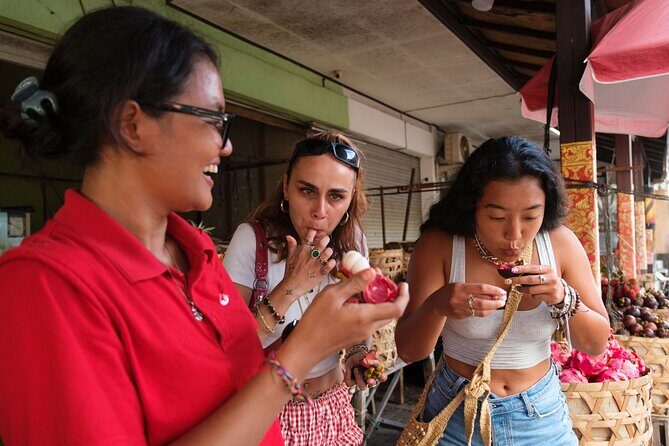
Right after Puputan Square, you’ll stop for Patung Catur Muka, the iconic four-faced god statue. It’s another around-15-minute stop with a photo-friendly layout, and it’s paired with a bit of colonial-era context in the area.
The tour also notes attention to landmarks like the Nederlandsch-Indië Sokkelklok and the Catur Muka monument. Even if you’re not a deep history person, this is useful because it helps you connect what you’re seeing in Denpasar to the stories being told. You stop looking at streets as just streets.
If you enjoy pictures, this part is where you’ll get your cleanest angles. If you don’t care about photos, focus instead on the meaning: how power, belief, and public space all overlap in the city center.
Jalan Gajah Mada: Babi Guling and Bakso on heritage streets
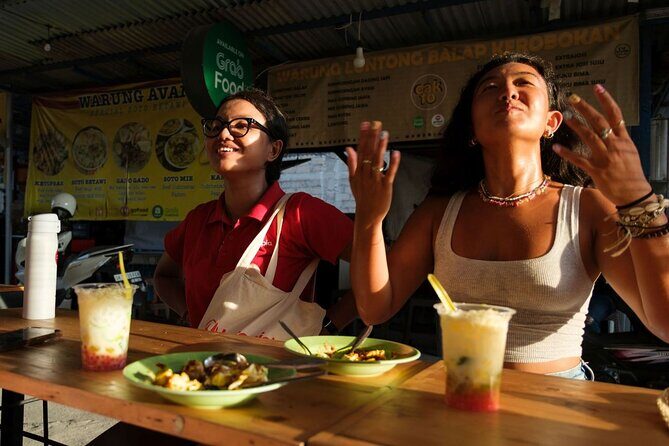
Next comes Jalan Gajah Mada, where the tour turns from “look and learn” to “order and taste.” This stop is about 30 minutes, and it’s where you’ll get the two big signatures: Babi Guling and Bakso.
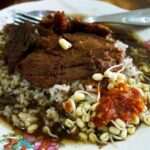
Babi Guling is Balinese roasted suckling pig, cooked on a rotisserie. The tour info flags an important cultural detail: it’s traditionally served at ceremonies. So when you taste it on a normal night out, it comes with extra meaning. You’re not just trying pork—you’re seeing how ceremonial food becomes part of everyday food culture, especially when a guide helps explain what you’re looking at.
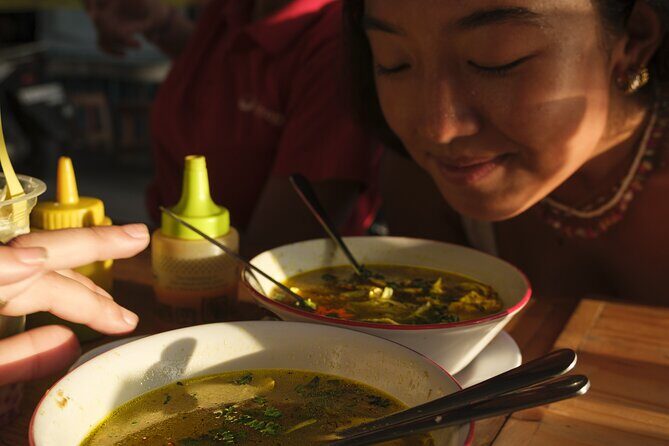
Bakso is the comforting Indonesian meatball soup. You’ll likely find it easy to appreciate even if you’re not usually a “try every soup” person. It’s warm, filling, and a good balance to the richer flavors that come with roasted meats.
A key planning note: this tour is meat-focused by design. If you avoid pork or don’t eat meat, this is one you’ll want to rethink. Dietary accommodations are limited, and vegetarian/vegan options aren’t supported on this route.
Badung Market and night-market snacks: Jaje Bali and street-food ordering
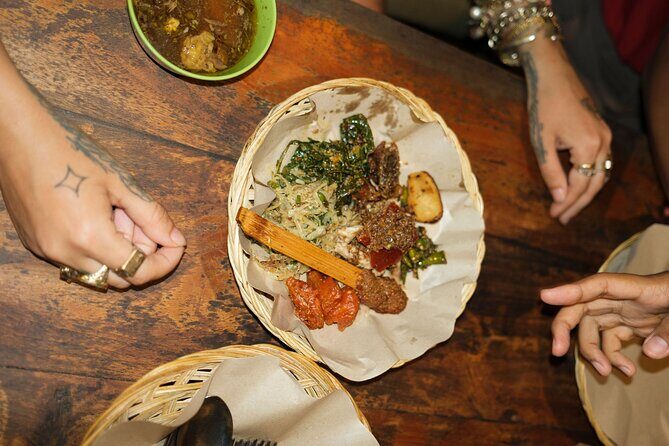
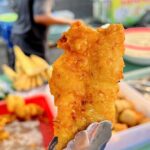
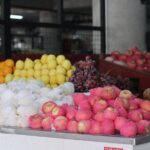
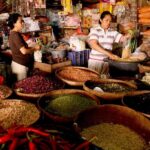
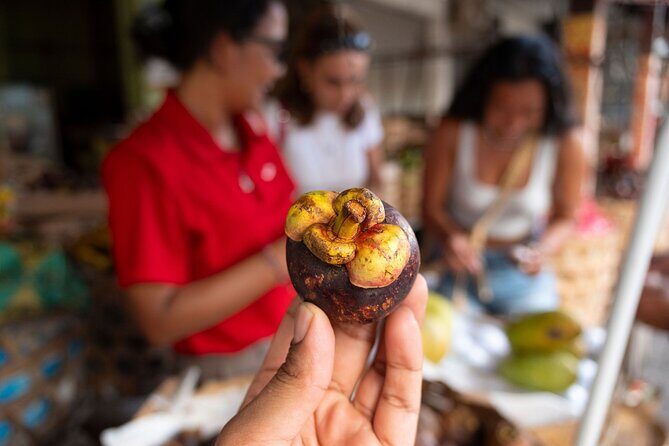
After the heritage street stop, you head toward Badung Market in Denpasar. You’ll spend about 30 minutes here in street-food territory, with traditional snacks like Jaje Bali.
Jaje Bali is a Balinese dessert, often colorful and made with rice flour and coconut. It’s the kind of treat that helps you experience the sweet side of street culture without needing a big meal. Think of it as a “bridge bite” between savory plates and coffee.
The tour’s emphasis on local vendors matters here. All food prepared at the venues you visit is described as grown and bought locally, and the people selling food are locals who sell for a living. In practice, that usually means you can ask questions and see the process, not just pass through a themed food hall.
One drawback to consider: street food can be unpredictable if you have strict dietary rules. The tour explicitly says it can’t cater for vegetarian, vegan diets or gluten allergies/intolerances. If you fall into those categories, this one may be more frustration than fun.
You can also read our reviews of more tours and experiences in Seminyak

NADHI Heritage coffee: a clean finish with Indonesian Arabica
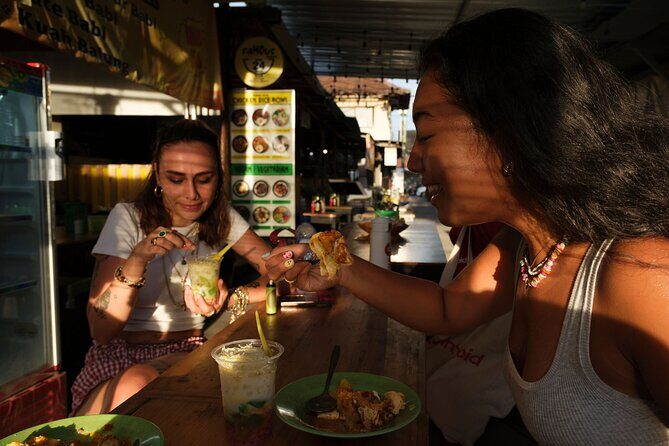
The last stop is Nadhi Heritage, at the address listed as Jl. Gajah Mada No.122, Pemecutan/nearby Denpasar. You’ll wrap up with authentic Indonesian Arabica coffee, hot or iced, with about 30 minutes allotted.
This is a smart ending for a street-food crawl. Coffee helps reset your palate after richer bites, and it also keeps the focus on local sourcing rather than switching to something generic. You’re also getting a “sit for a minute” moment before you head off—useful if you want to enjoy the evening instead of sprinting from one bite to the next.
The coffee stop also gives you a chance to think about what you learned. Temple symbolism, colonial-era context, and food traditions all come together in the last quarter of the walk.
Price and value: what $45 buys in Denpasar
The price is $45 per person, for about 3 hours of guided walking plus multiple included tastings. The included items are clearly defined: Babi Guling and Bakso, Jaje Bali snacks, and Indonesian Arabica coffee (hot or iced). You also get guided visits at Pura Agung Jagatnatha and Puputan Square, plus landmark stops tied to colonial-era points like the Sokkelklok and Catur Muka monument.
Here’s how I’d judge the value: you’re paying for three things at once—translation and cultural context, access to local stalls that you might not find on your own, and a tight route that keeps you moving efficiently. Because the temple-related admissions are listed as free, you’re not paying extra entry fees for the history portion.
The small group size also supports the value. With up to 12 people, it’s easier to ask, pause, and actually taste without feeling herded. And the tour explicitly notes that it supports 4 to 6 local food stalls, which means your money is more likely to land in everyday vendor life rather than only in a guide’s overhead.
If you do book, budget for additional food and drinks if you end up craving more. Those extras aren’t included, and street-food appetites can grow fast once you’re standing among hot grills and fresh snacks.
Guides who make the food feel specific (not generic)
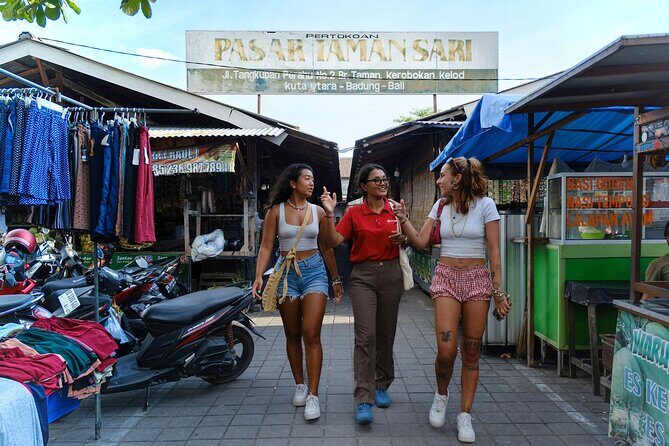
This tour experience really depends on the guide, and the names that come up—Putra, Lena, Irfan, and Srix—are tied to a style that feels friendly and practical.
What stands out across the guide stories: they explain what you’re eating and how to choose it. For example, Irfan is noted for bringing people toward fruit and giving tips on what to select, plus guidance on how to pick sweets like kue (cakes) and soup like soto. Lena is described as easy to talk to, with a smooth route from markets to tastings. Putra and Srix are credited with mixing food with local customs and city life observations, not just walking from one plate to the next.
Even if you don’t remember every detail, you’ll likely remember the “why” behind a dish—especially Babi Guling, since it’s traditionally linked to ceremonies.
Who should book this Denpasar street-food and history tour
This is a good match if you want local food in a real urban setting and you’re curious about how history and daily life intersect in Denpasar. You’ll likely enjoy it if you’re the type who likes asking questions at food stalls and learning what to look for before you taste.
It’s also a solid option for people who want a short evening plan. With a 4:00 pm start and about 3 hours, you can fit it into a first day or a second-day “orientation” evening.
Where it doesn’t fit:
- If you need vegetarian, vegan, or gluten-free support, the tour states it can’t accommodate those needs.
- If you’re traveling with kids under 6, the tour says they aren’t permitted.
- If you hate pork or don’t eat meat, this isn’t the right route because Babi Guling is part of the core included tastings.
Should you book Taste & Explore Bali: Denpasar Street Food & Historic Sites?
Book it if you want an evening that feels both tasty and meaningful, with Babi Guling, Bakso, Jaje Bali, and a finish at Nadhi Heritage coffee—all backed by a guide and a route through central Denpasar’s meaningful landmarks like Pura Agung Jagatnatha and Puputan Square.
Skip it if your food rules are strict (vegetarian/vegan or gluten intolerance), if you’re traveling with very young children, or if you don’t want pork-based dishes in your included tastings.
If you’re flexible with food and you enjoy learning as you eat, this one’s hard to beat for the price. You get a focused 3-hour plan that supports local vendors and adds context, instead of sending you to a generic “tourist street.”
FAQ
What time does the tour start, and how long is it?
The tour starts at 4:00 pm and lasts about 3 hours.
Where do I meet and where does it end?
You meet at Agung Jagatnatha Temple (Jl. Surapati No.7, Dangin Puri, Kec. Denpasar Tim.). The tour ends at Nadhi Heritage (Jl. Gajah Mada No.122, Pemecutan, Kec. Denpasar Bar.), where the coffee stop happens.
What food and drinks are included?
Included tastings include Babi Guling, Bakso, Jaje Bali snacks, and Indonesian Arabica coffee (hot or iced). Admission tickets for the included sites are listed as free.
Can the tour accommodate vegetarian, vegan, or gluten-free needs?
The tour says it does its best, but it’s unable to cater for vegetarian, vegan diets or gluten allergies/intolerances at the venues it visits.
Is this tour okay for children?
It’s best suited for adults and older children, and it says children under 6 aren’t permitted. There are no kids’ meals listed.
How big is the group?
The tour runs with a maximum of 12 travelers, and it also offers the option of a private tour.