REVIEW · SEMINYAK
Ubud Cultural and Historical Guided Tour with Transfer
Book on Viator →Operated by Bali Tourist Information · Bookable on Viator
A day in Ubud can feel like a map. This guided historical route links Batuan village traditions with major sacred sites like Tirta Empul and Gunung Kawi, so you see how daily life and religion mix in Bali. I love the way the English-speaking driver-guide connects what you’re seeing to local meaning, and I also love the comfort of an A/C vehicle for long hops between stops.
One practical consideration: several temples and caves require separate entrance fees, so you’ll want to budget cash/IDR ahead (meals aren’t included either). If you’re hoping for one set fee that covers everything, this may feel slightly more “pay-as-you-go” than you expected.
In This Review
- Key highlights you’ll actually feel on this tour
- Ubud’s temple day feels like a story with chapters
- Price and logistics: why $45.91 can still be good value
- Your morning starts early: pickup from Seminyak and a 8:30am start
- Stop 1: Batuan Traditional House Compound (Gung Aji) and how Bali lives at home
- Stop 2: Puseh Batuan Temple and the Khayangan Tiga system
- Stop 3: Elephant Cave (Goa Gajah) and the 11th-century water story
- Stop 4: Gunung Kawi King Memorial at Tampaksiring (rock-cut memorials)
- Stop 5: Tirta Empul Temple and the spring-water cleansing setting
- Stop 6: Gunung Kawi Sebatu Temple for quieter Vishnu worship
- Guide quality: where the day really comes alive
- What to bring (and how to keep it respectful without overthinking)
- Schedule reality check: six sites means a full day
- Who this tour suits best
- Should you book this Ubud historical day?
- FAQ
- What time does the tour start?
- Where is the tour located and is pickup offered?
- How long is the Ubud Cultural and Historical Guided Tour?
- Is the tour private or shared?
- What’s included in the tour price?
- Are entrance fees included for every stop?
- How much should I budget for entrance fees?
- Is free cancellation available?
Key highlights you’ll actually feel on this tour
- Village-to-temple pacing across Batuan, Tampaksiring, and Ubud-area sights in one day
- English-speaking guidance that helps you understand what temples are for (not just where they are)
- A/C vehicle + bottled water, which matters when the day runs close to 10 hours
- Goa Gajah and the 11th-century story behind Elephant Cave’s design and water setup
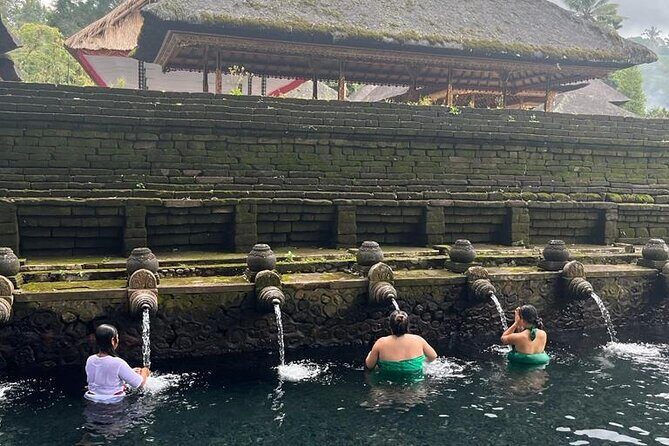
- Tirta Empul spring pools and the cleansing ritual setting around the bathing areas
- Private-group format, so the day feels tailored to your group’s rhythm
Ubud’s temple day feels like a story with chapters
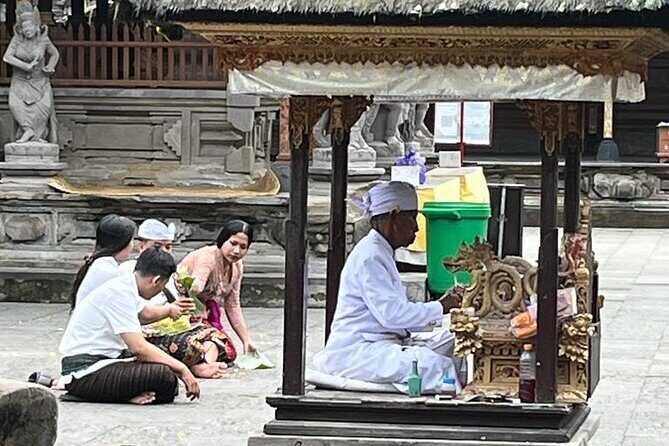
This tour works because the stops build in a logical order. You start in Batuan, where you’ll see how a traditional compound functions, then you move into village temples, and only later do you shift into larger, famous spiritual complexes like Tirta Empul. That sequencing matters, because each place makes more sense after you’ve seen the basics of Balinese worship.
The other win is that you’re not stuck just taking photos. You’re also learning what each site is tied to—like how certain village temples belong to a larger system called Khayangan Tiga—so your brain has hooks to hang the day on.
You can also read our reviews of more guided tours in Seminyak


Price and logistics: why $45.91 can still be good value
At about $45.91 per person for a roughly 10-hour tour, you’re paying mostly for the vehicle, the driver-guide’s time, and the smooth routing between sites. That’s the part that can save you stress, especially if you’re based around Seminyak and don’t want to arrange multiple rides.
What you should plan for is the gap between included and not included. Your tour price includes A/C transport, parking fees, English-speaking guidance, and bottled water. You’ll pay separately for several entrances, including Tirta Empul and Elephant Cave, and you’ll need to handle your own meal.
If you price out the alternative—riding around on your own plus paying for guides at multiple stops—you’ll often find this kind of guided day still wins on convenience.
Your morning starts early: pickup from Seminyak and a 8:30am start
The start time is 8:30am, and pickup is offered from the Seminyak area (the exact pickup point depends on where you’re staying). A/C helps a lot here because you’ll likely spend a lot of the morning and early afternoon on the road.
Also, since the tour is private (your group only), the schedule tends to feel less chaotic than shared bus days. You still want to show up ready—just like with any day that stacks six major sites.
Stop 1: Batuan Traditional House Compound (Gung Aji) and how Bali lives at home
Your first stop is Batuan village, in the Sukawati District area of Gianyar Regency. You’ll visit the traditional house compound associated with the Gung Aji family—often called the Bali Traditional House by foreigners.
This isn’t a “temple photo stop.” It’s a chance to see how a traditional compound is organized and why it matters to daily life. A tour like this works best when you treat it like orientation: you’re learning the rhythm of home, worship, and community space before you move into sacred buildings.
Good to know: the admission ticket here is listed as free, so this stop is a low-friction start to the day. You’ll spend about 1 hour here, which is long enough to look closely without turning it into a lecture marathon.
Stop 2: Puseh Batuan Temple and the Khayangan Tiga system
Next you’ll move to Puseh Batuan Temple, a local village temple. The key detail that makes this stop worth slowing down: it’s part of the Khayangan Tiga system, dedicated to Wisnu (the protector).
When you understand that these temples are tied into a village-wide religious framework, the day stops feeling random. Instead of each stop being a separate attraction, it becomes one connected map of worship roles.
You’ll have around 1 hour 30 minutes here. Entrance isn’t included, so you’ll want to budget IDR 30,000 per person. This is also a good moment to remember temple etiquette: move carefully, dress respectfully, and keep your behavior calm.
You can also read our reviews of more historical tours in Seminyak



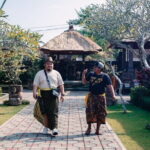
Stop 3: Elephant Cave (Goa Gajah) and the 11th-century water story
Elephant Cave, also known as Goa Gajah, is one of those Bali sites that people remember because it mixes odd details with real purpose. The cave complex dates to the 11th century, connected to the king of Udayana, and the name links to a nearby river, Lua Gajah.
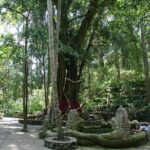
The design details are part of what makes it fascinating. In front of the bathing area, there’s a water setup with multiple figures, and that blend of bathing space and sacred cave space tells you this was never just about walking into a dark hole.
You’ll spend about 2 hours here. Entrance is not included and is listed at IDR 50,000 per person.
Two practical tips for this stop:
- Wear shoes you can walk in confidently, because cave areas can be uneven.
- Bring a small patience buffer. You’ll likely want time to look around before rushing into photos.
Stop 4: Gunung Kawi King Memorial at Tampaksiring (rock-cut memorials)
Then you shift to Gunung Kawi, often associated with Tampaksiring. This complex includes 10 rock-cut memorial temples, built in the 11th century during the period of Anak Wungsu, the son of Udayana King.
You’ll get about 1 hour 30 minutes at this stop, which is enough time to understand the layout and enjoy the views without feeling herded. Entrance isn’t included, and the tour data lists IDR 50,000 per person.
What I like about this part of the day is the contrast. After bathing, caves, and village worship, this is more about memorial space and stone design. You’re seeing how Balinese spirituality includes remembrance and sacred geography, not just “temple buildings.”
Stop 5: Tirta Empul Temple and the spring-water cleansing setting

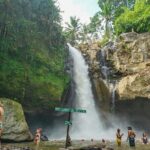
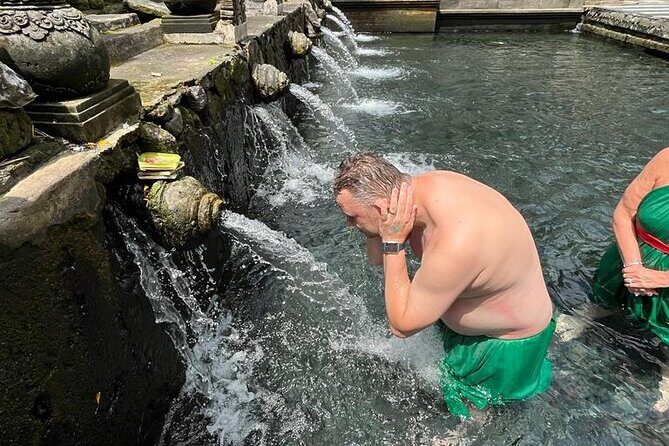
Now comes Tirta Empul (the Spring Water Temple), located in Tampaksiring near Gunung Kawi. The temple is built around springs and bathing pools, and the tour highlights the cleansing rituals tied to the water.
Even if you don’t plan to participate in rituals, this stop is still meaningful because it shows the spiritual logic of the whole day. Water is not just scenery here—it’s part of a sacred process, built into the temple’s design.
You’ll have about 2 hours at Tirta Empul. Entrance isn’t included and is listed at IDR 50,000 per person.
Practical note: this is the most likely place where you’ll want to think about what you’re wearing. You may see people preparing for cleansing. You’ll also want to follow local guidance on where to stand and how to behave around the bathing pools.
Stop 6: Gunung Kawi Sebatu Temple for quieter Vishnu worship
Your final temple is Gunung Kawi Sebatu. The exact construction date isn’t known, but historical records indicate it was built for worship of the gods, especially Lord Vishnu.
This stop is listed at 2 hours, which is generous. After Tirta Empul, the extra time helps you slow down and absorb the “why” instead of only seeing the “what.”
Entrance isn’t included and is listed at IDR 30,000 per person. If you’re the type who likes to end with something calmer rather than sprinting to the last photo, this is a nice way to finish.
Guide quality: where the day really comes alive
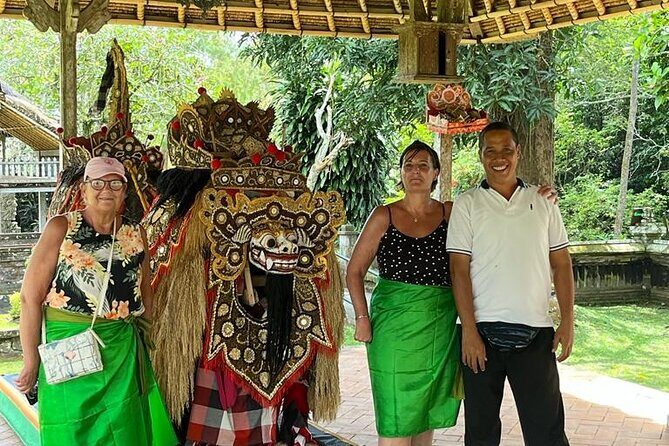
A tour lives or dies on the guide, and this one leans on an English-speaking driver-guide who can explain what you’re looking at. In the feedback I’ve seen, names like Kadek and Nanda show up in connection with strong pacing and real patience.
One detail that stands out: Kadek was reported to be willing to wait when timing went sideways. That matters in Bali. Days like this are built on multiple moving pieces—traffic, temple rules, and your group’s readiness. A guide who can keep things steady makes the experience feel smoother, not rushed.
I also like that the itinerary isn’t just a checklist. When the guide talks about Khayangan Tiga and the worship focus of each temple, you’ll start noticing patterns between sites instead of treating each one like an isolated attraction.
What to bring (and how to keep it respectful without overthinking)
You’ll be moving through sacred spaces, so dress and behavior matter. Keep it simple:
- Bring a light layer and something comfortable for warm weather.
- Use a small day bag for water and essentials.
- Plan on temple-appropriate clothing (shoulders and knees covered).
You’ll have bottled water included, which helps. For Tirta Empul and cave or memorial areas, wear footwear that won’t make you regret your choices halfway through.
If you’re nervous about etiquette, you don’t need to guess wildly. Just follow the guide’s lead, watch what others do around the worship areas, and keep your voice low.
Schedule reality check: six sites means a full day
This is a lot of ground and a full day. The stops are meaningful, but you’ll feel the pace. The good news is each location gets a decent time block—generally 1 to 2 hours—so it doesn’t feel like you’re just passing through.
Still, if you hate long days, consider whether you want a lighter plan. This one is best when you’re energized by seeing multiple religious sites in one shot and you don’t mind paying attention for hours.
Also, meals aren’t included. That’s not a deal-breaker, but it’s your cue to plan snacks or set a lunch strategy before the day starts so you’re not waiting around hungry.
Who this tour suits best
This is a strong fit if you want:
- A structured day that connects temple sites to meaning, not just sightseeing.
- Comfort between stops, thanks to A/C transport and bottled water.
- A day that includes both village life (Batuan) and major spiritual landmarks (Goa Gajah, Tirta Empul, Gunung Kawi).
It may not be ideal if you prefer to wander alone with minimal structure, or if you want every entrance included in the base price.
Should you book this Ubud historical day?
My decision rule is simple: book it if you want a guided route that makes you understand what you’re seeing. This one has enough variety—traditional compound, village temples, cave complex, memorial stonework, and spring-water cleansing—that you’ll come away feeling like you saw more than just famous names.
Skip it or consider alternatives if:
- You don’t want to manage separate entrance fees at multiple stops.
- You need a shorter day than about 10 hours.
- You’re expecting the tour price to cover meals and every ticket automatically.
If you’re aiming for a meaningful, tightly planned day around Batuan, Goa Gajah, Gunung Kawi, and Tirta Empul, this is a solid way to do it with less hassle.
FAQ
What time does the tour start?
The start time is 8:30am.
Where is the tour located and is pickup offered?
The tour location is Seminyak, Indonesia, and pickup is offered.
How long is the Ubud Cultural and Historical Guided Tour?
It runs for about 10 hours.
Is the tour private or shared?
It’s private. Only your group will participate.
What’s included in the tour price?
Included items are an air-conditioned vehicle, parking fees, an English speaking driver tour guide, and bottled water.
Are entrance fees included for every stop?
No. Entrance fees are not included for Puseh Batuan Temple, Elephant Cave, Mount Kawi (Gunung Kawi), Tirta Empul Temple, and Gunung Kawi Sebatu Temple. Batuan Traditional House Compound is listed as free.
How much should I budget for entrance fees?
Based on the provided amounts: Tirta Empul IDR 50,000 per person; Gunung Kawi Sebatu Temple IDR 30,000 per person; Puseh Batuan Temple IDR 30,000 per person; Elephant Cave IDR 50,000 per person; and Mount Kawi (Pakrisan River) IDR 50,000 per person.
Is free cancellation available?
Yes. You can cancel up to 24 hours in advance for a full refund, with local time cut-offs.