REVIEW · SEMINYAK
Balinese Cooking Class in Seminyak
Book on Viator →Operated by The Amala Bali · Bookable on Viator
Fresh spices, serious flavor lessons.
This Balinese cooking class in Seminyak is a focused, hands-on way to understand why Balinese food tastes the way it does, with clear menu choices and hotel pickup within Seminyak so you’re not wrangling taxis. I also like the structure: you cook your own 3-course meal, then eat it together as lunch or dinner. One consideration: the market visit is optional, and the exact experience depends on which session you pick and whether you’re booking with the minimum group requirements.
What I like most here is the cooking guidance from the team—names like Chef Putu, plus staff such as Manik and Evi show up repeatedly in standout feedback—and the class is built around real Balinese staples. You’ll prep dishes like lawar salad, tum ikan (steamed fish in banana leaf), and dadar gulung (coconut pancake with palm sugar), with a full vegetarian menu option too. The trade-off is timing and pace: a couple of reviews note it can feel chopping-heavy, so if you’re looking for a long, slow culinary chat, you might want to mentally budget for active kitchen work.
In This Review
- Key highlights worth planning around
- Seminyak Cooking Class at The Amala: Why This One Feels Like Bali
- Your 3-Course Menu: What You’ll Cook (and How It Maps to Real Balinese Flavors)
- Menu 1: Coconut, salad, fish in banana leaf
- Menu 2: Papaya soup, lemongrass satay, fried banana
- Vegetarian menu: Peanut dressing, banana-leaf steaming, black rice pudding
- How the Class Runs: From Ingredients to Your Own Plate
- Optional Jimbaran Fish Market: What You Gain, and What to Watch
- Pickup, Timing, and the Small-Group Advantage in Seminyak
- The Food You Eat: Lunch or Dinner That Actually Teaches You Something
- Price and Value: Is $66.67 Worth It?
- Who Should Book This Cooking Class in Seminyak?
- Should You Book? My practical decision guide
- FAQ
- How long is the Balinese cooking class in Seminyak?
- Is hotel pickup and drop-off included?
- What dishes will I cook?
- Is the market visit included?
- What if I’m booking for just one person for the market visit?
- What’s the maximum group size?
- Do I get any souvenirs or proof of completion?
- What is the minimum age?
Key highlights worth planning around
- 3-course menus you actually cook: you choose Menu 1, Menu 2, or the vegetarian set (same menu for everyone in the class)
- Optional Jimbaran fish market upgrade: morning only, led by the chef, with tips for selecting fresh ingredients
- A small class size (max 10): more personal help when you’re learning spice blends and shaping dishes
- You keep the apron + get a certificate: small souvenirs that make the day feel complete
- Pickup and drop-off in Seminyak area: saves time and keeps the class start feeling smooth
Seminyak Cooking Class at The Amala: Why This One Feels Like Bali
If you’ve ever tried a cooking class that felt like a demo with a few quick bites, this one reads very different on paper—and the reviews back it up. The format is built around a real ingredient-to-plate workflow: you’re introduced to what you’ll use, you prep under guidance, and then you eat what you cooked. That matters because Balinese cooking isn’t just about spice—it’s about combinations, method, and how ingredients behave once they hit heat, acid, and coconut.
The setting helps too. The class is held at The Amala Boutique Retreat (you start there, and the tour ends back there). Several reviews specifically praise the location and calm vibe, and that’s useful to know because Bali cooking classes can be noisy or rushed. Here, the tone seems designed for learning without chaos.
One more detail that helps your experience: the tour runs about 3 hours, so it’s long enough to feel like you learned something practical, but short enough to still enjoy the rest of your day in Seminyak.
You can also read our reviews of more cooking classes in Seminyak

Your 3-Course Menu: What You’ll Cook (and How It Maps to Real Balinese Flavors)
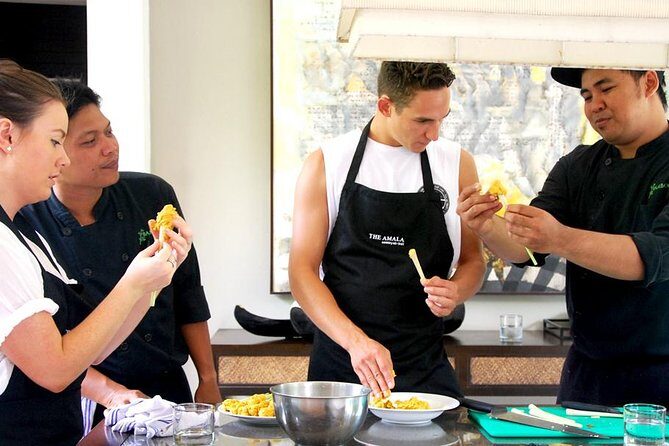
This class is menu-driven. Everyone in your session follows the same menu choice, so your first decision is what style you want to cook.
Menu 1: Coconut, salad, fish in banana leaf
If you like a mix of fresh and cooked flavors, Menu 1 is a classic Balinese spread:
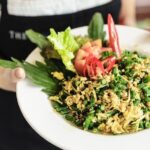
- Lawar salad: green bean + fresh coconut + chicken salad style
- Tum ikan: steamed fish in banana leaf
- Dadar gulung: coconut pancake with palm sugar and coconut
This menu is a great pick if you want to see how Balinese food balances cooling textures (coconut, fresh components) with warming spices and aromatic wrapping (banana leaf for the fish).
Menu 2: Papaya soup, lemongrass satay, fried banana
Menu 2 leans into seafood and bold savory-sweet contrast:
- Jukut gedang mekuaah: young papaya soup with seafood
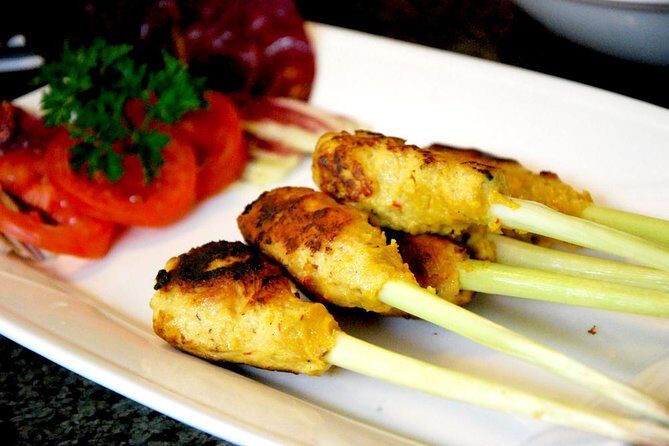
- Sate lilit ayam: chicken satay on lemongrass stick + steamed rice
- Godoh biu: Balinese fried banana
The papaya soup is the kind of dish that teaches technique, not just taste. Young papaya adds a specific texture, and learning the method helps you reproduce it later. And that satay-on-lemongrass setup gives you a more authentic shape and cooking rhythm than the standard grilled skewer you might expect.
Vegetarian menu: Peanut dressing, banana-leaf steaming, black rice pudding
Vegetarian diners aren’t treated like an afterthought here. The vegetarian set includes:
- Gado-gado: vegetable salad with peanut dressing
- Pepes tahu: steam bean curd in banana leaf
- Bubur injin: Balinese black rice pudding
If you’re vegetarian or cooking for someone who is, this menu is valuable because it uses banana leaf steaming and dessert structure (black rice pudding) rather than just swapping out proteins. You still get method lessons that carry beyond one meal.
You can also read our reviews of more tours and experiences in Seminyak






How the Class Runs: From Ingredients to Your Own Plate
The day follows a simple flow, and that’s a good thing when you want to learn fast without feeling lost.
You meet the chef and get a first intro to:
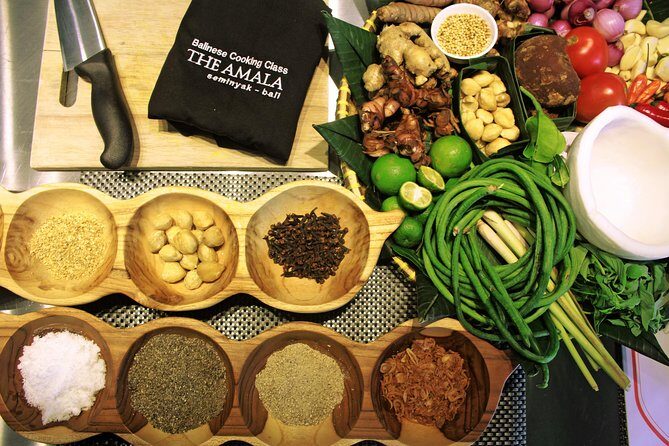
- ingredients you’ll use
- the equipment you’ll handle
- what “done” should look like at each stage
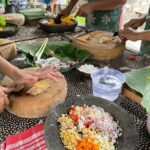
Then you start prepping. The most common hands-on tasks in this style of class are chopping, mixing, and assembling. Some reviews call out that it can feel like a lot of chopping—so if you prefer learning through tasting and discussion more than cutting, just know where your time goes. On the bright side, chopping is also where you build confidence. When you learn what each ingredient should look like after prep, you’re halfway to recreating the dish later.
The coaching seems to be the centerpiece. Multiple reviews highlight how clear and engaging the teaching felt, with chefs named such as Chef Putu and assistants like Manik and Evi showing up. That matters because Balinese cooking can sound exotic on menus, but in class the steps get translated into something doable.
Also: you have chances to participate. One review mentions each person getting turns at cutting and cooking, and that lines up with what you’d want from a class, not a show.
At the end, you receive a certificate and you can keep your class apron as a souvenir. Small touch? Yes. But it turns the class into a finished “event” rather than a random activity that disappears into your day.
Optional Jimbaran Fish Market: What You Gain, and What to Watch
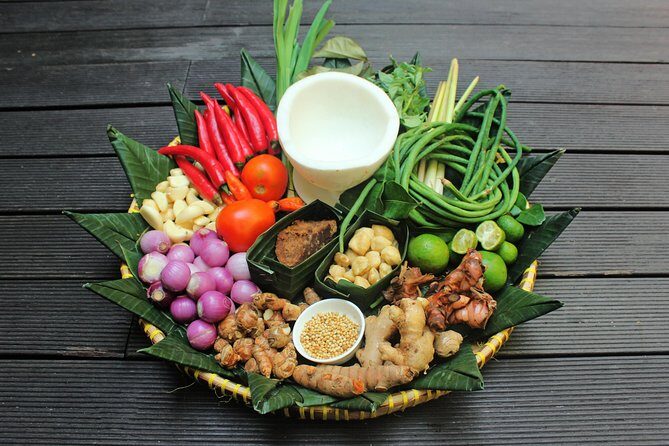
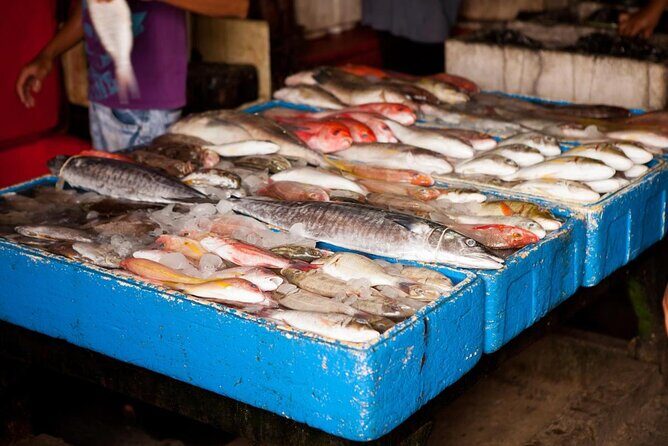
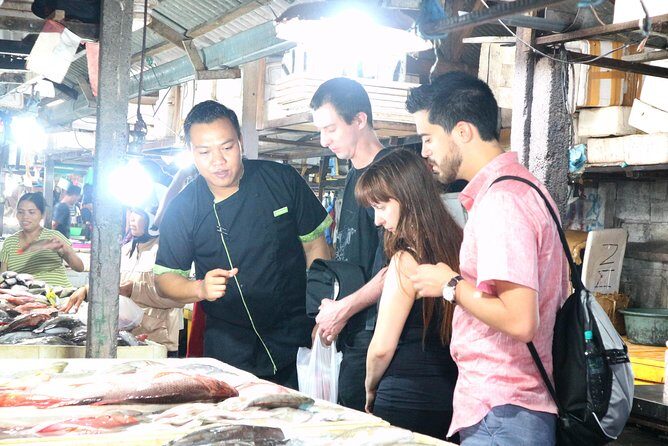
The morning upgrade is where this class adds extra local texture. If you choose the morning session, you can also visit the fresh fish market in Jimbaran with your chef.
This part can be especially useful if you’re interested in how Balinese cooks choose ingredients and build flavor right from the source. One review highlights that the chef gave practical guidance on selecting the freshest fish—one tip mentioned was that redder eyes signal freshness for red snapper. You also see how the market works, and you get a chance to understand what’s available that you might not find at home.
Is it guaranteed to feel like a tour? It’s an option, and it has rules:
- the market tour requires a minimum of 2 persons per booking
- if you book for 1 person, there’s an extra charge of Rp100,000 net
So if you’re traveling solo and really want the market, you’ll want to confirm how that add-on applies to your booking before you lock it in.
Also, plan for time. The morning flow is structured so you visit the market, then return for the chef intro and cooking, and then you eat what you made. If you prefer a relaxed day schedule, you might prefer the afternoon session without the market.
Pickup, Timing, and the Small-Group Advantage in Seminyak
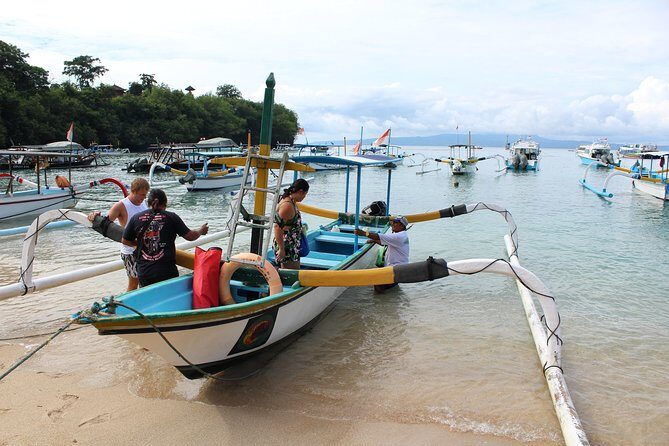
This experience is built for convenience in Seminyak. You get round-trip private transfer within the Seminyak area, and your meeting point is Jl. Kunti I No.108, Seminyak at The Amala Boutique Retreat. The activity ends back at the meeting point.
Timing is straightforward:
- total duration is about 3 hours
- you can pick morning or afternoon
And the class size matters. It caps at 10 travelers, which is one of the reasons the instruction likely feels personal. In a bigger group, you might get one or two turns at the cutting board. Here, you’re more likely to be actively involved—especially since the cooking tasks change across the menu.
One thing to keep in mind: the class centers on you cooking, but that doesn’t mean the food will always land hot at the table. A review mentions the meal was cold once it was served, which could be a rare hiccup—but it’s worth being realistic. If you’re sensitive to temperature, don’t expect a restaurant-perfect plating moment.
The Food You Eat: Lunch or Dinner That Actually Teaches You Something
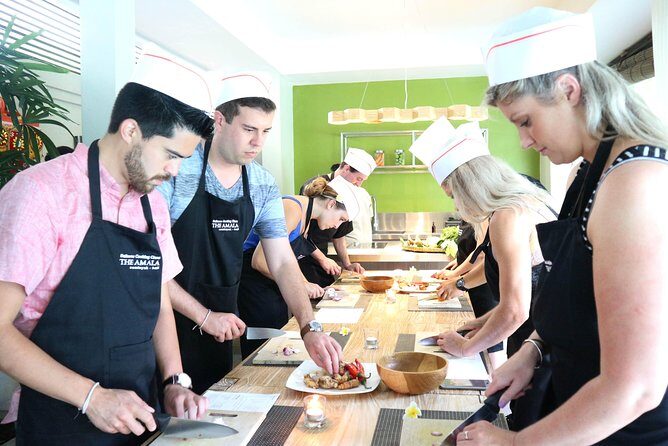
At the end, you enjoy your own self-cooked Balinese meal—listed as lunch or dinner depending on your session. The structure is nice because it reinforces the lesson. You taste the result while the steps are still fresh in your mind: you remember what went into the spice mix, what was steamed, and what was fried.
The portion feel seems generous. Multiple reviews mention being full and finding no shortage of food. That’s practical value: many food tours teach you, but you end up hungry afterward. Here, the meal is part of the teaching cycle, not an afterthought.
Vegetarians get a complete meal too. The vegetarian set isn’t just “something similar.” It includes:
- peanut-dressed vegetable salad (gado-gado style)
- banana leaf steamed tofu (pep es tahu)
- black rice dessert (bubur injin)
So you finish with a savory and sweet arc, which makes the whole experience feel more balanced than a single dish class.
Price and Value: Is $66.67 Worth It?
At $66.67 per person, this class sits in the middle ground of Bali cooking experiences. The value comes from three things you can’t easily replicate on your own:
- Expert guidance while you cook (not just watching)
- A full 3-course menu that maps to real Balinese dishes
- Convenience with pickup and the class taking place at a planned location
If you upgrade for the fish market, you add a second layer of learning: ingredient selection and the real ingredient pathway that leads to your meal.
Could it feel expensive if you only want a casual snack and a photo? Yes. If you’re not interested in cooking, you’ll likely find it better to spend your day eating and exploring rather than paying for kitchen time.
Who gets the best deal?
- Couples and friends booking together (you share the same menu experience)
- People who want practical recipes they can attempt at home
- Anyone curious about the difference between Balinese “wow flavors” and the methods behind them
Who Should Book This Cooking Class in Seminyak?
Book this if you want a day that’s active but not overwhelming. The class is best for people who enjoy cooking tasks and want to bring something home besides photos.
You’ll likely enjoy it if:
- you’re staying around Seminyak
- you want an experience with pickup to cut down logistics
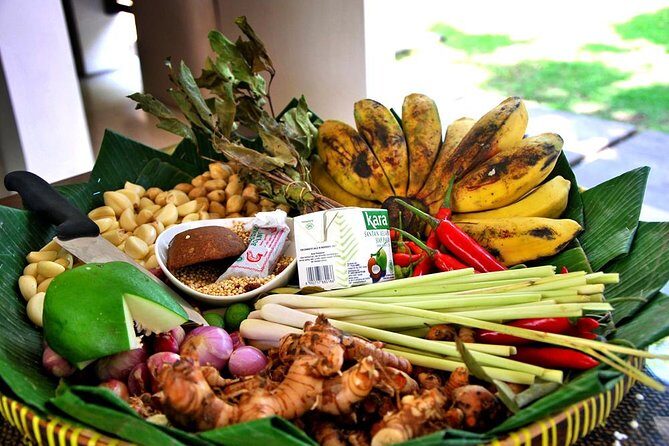
- you like the idea of banana leaf steaming and spice-based dishes
- you want a vegetarian-friendly option that feels like a real menu
If your group includes someone who dislikes curry flavors, you’ll still be fine—one review mentions the chef built dishes in a way that avoided the reviewer’s dislike while keeping authenticity.
And if you’re picky about pace, set your expectations: some of the learning is repetitive prep work. The payoff is when those steps become a dish you can recognize, taste, and replicate.
Should You Book? My practical decision guide
I’d book it if your Bali trip includes a “learn something useful” slot. The combination of small group size, chef-led instruction, and a complete 3-course meal you cook yourself is the winning formula.
I’d think twice if:
- you only want a quick tasting experience
- you’re traveling solo and the market add-on matters to you without paying the solo rule
- you’re very temperature-sensitive, since at least one review mentioned the meal arrived cold
If you want a kitchen-based snapshot of Balinese cooking—using real dishes, real ingredients, and real technique—this is the kind of class that earns its spot on your itinerary.
FAQ
How long is the Balinese cooking class in Seminyak?
The class is about 3 hours (approx.).
Is hotel pickup and drop-off included?
Yes. Hotel pickup and drop-off are included within the Seminyak area, with round-trip private transfer.
What dishes will I cook?
You’ll cook a 3-course meal. Menu options include items like lawar salad, tum ikan (steamed fish in banana leaf), dadar gulung, or young papaya soup with seafood, chicken satay on lemongrass stick, fried banana, plus a vegetarian menu with gado-gado, pepes tahu, and bubur injin.
Is the market visit included?
The Jimbaran fish market visit is optional and tied to the morning session. It has a minimum requirement of 2 persons per booking.
What if I’m booking for just one person for the market visit?
For the market tour with 1 person, there’s an extra charge of Rp100,000 net.
What’s the maximum group size?
The activity has a maximum of 10 travelers.
Do I get any souvenirs or proof of completion?
Yes. You receive a certificate from the chef and you can keep your class apron as a souvenir.
What is the minimum age?
The minimum age is 12 years.